
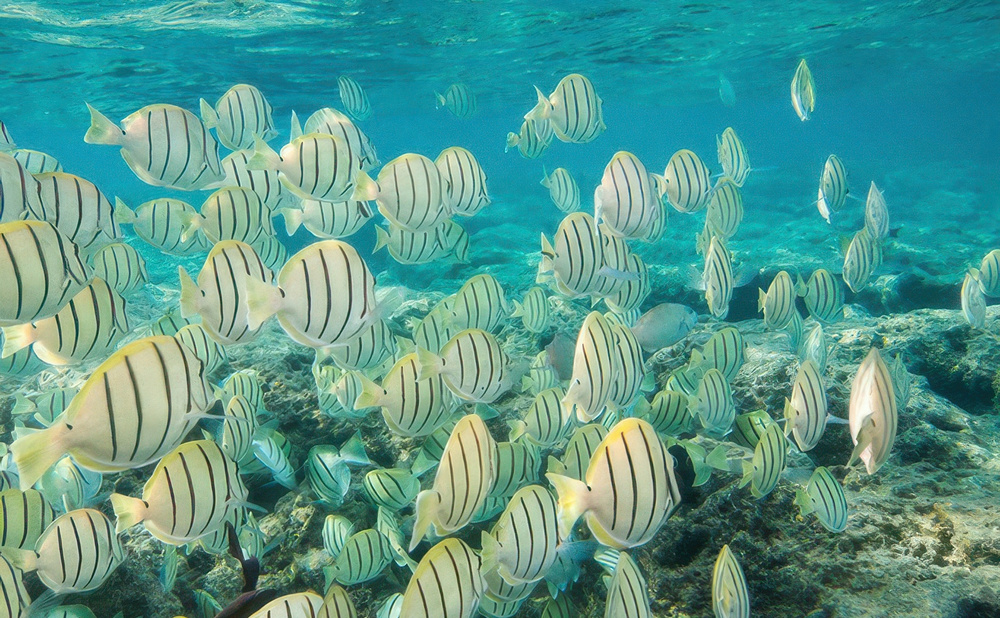
Snorkeling in the ocean is undoubtedly the most popular activity in Hawaii!
Wouldn’t you love to visit a beach where you can swim alongside large schools of fish and sea turtles?
In this article, the tour guides from Aloalo Travel, who are professionals in ocean activities, introduce five recommended snorkeling beaches in Hawaii.
There are various spots ranging from calm waters safe for beginners and shallow areas for non-swimmers, to places teeming with marine life where you might even encounter dolphins and Hawaiian Monk Seals.
We have narrowed it down to truly recommended spots, so please use this as a reference for your Hawaii trip!
Electric Beach
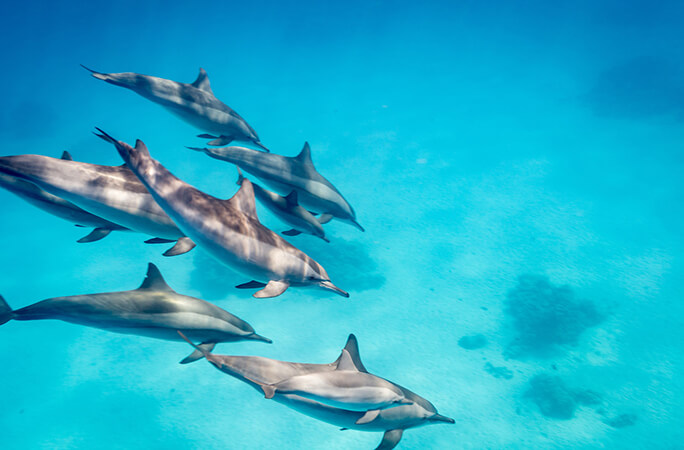
Electric Beach is the number one snorkeling spot on the West Coast.
It is a beach where many creatures gather within an area of beautiful coastline!
Warm water discharged from the power plant directly in front of the beach raises the seawater temperature, attracting many colorful fish, sea turtles, and Hawaiian Monk Seals.
The name Electric Beach comes from its proximity to the electric power plant.
It is a hideaway-like beach, so there are fewer people, allowing you to spend a relaxing time.
Photo Spots at Electric Beach
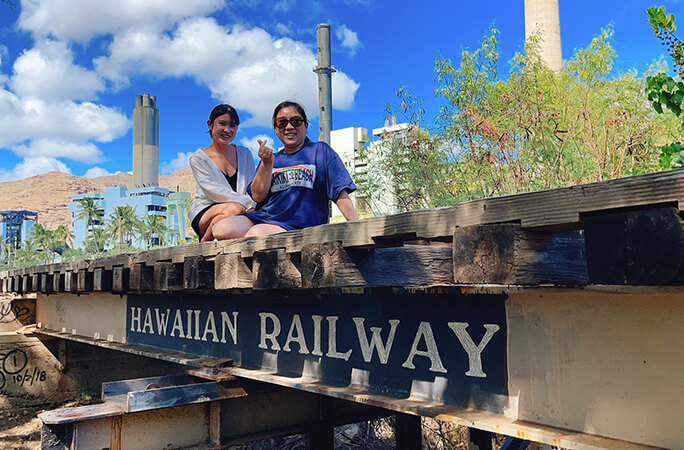
Electric Beach is actually frequently visited by tourists as an Instagram-worthy spot.
The tracks of the Hawaiian Railway, which runs as a sightseeing train between Kapolei and Electric Beach on Wednesdays, Saturdays, and Sundays, are particularly popular!
The scenery from here is nice, and although there is no station, this location serves as the train’s terminus.
If you sit on the tracks and take a photo, you can capture a picture filled with Hawaiian vibes, so please give it a try!
There are also benches facing the sea where you can enjoy the Hawaiian scenery.
Yachts often anchor offshore, making the photos look even better.
How to Enjoy Electric Beach
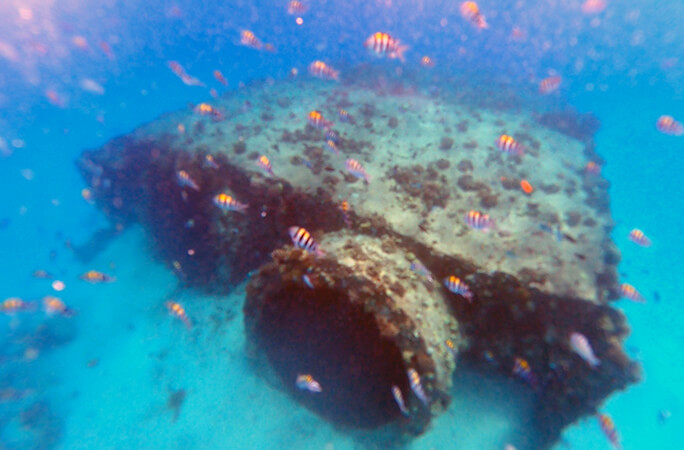
There are many ways to enjoy Electric Beach!
Since the sandy beach at Electric Beach narrows suddenly, large waves often break at the shoreline.
Therefore, we recommend relaxing on the sand or playing in the waves at the water’s edge.
It is a nature-rich area, so you can see mongooses just by walking nearby, and you can view Hawaiian Monk Seals and sea turtles from the top of the cliffs.
One of the good things about Electric Beach is that you can enjoy it without swimming!
Still, the most fun activity is undoubtedly snorkeling.
We highly recommend heading about 50 to 100 meters straight out offshore.
This is where the warm water from the power plant is discharged, attracting many fish and sea turtles.
Dolphins circulate in this area, so if you float around noon, you might be able to play with them!?
It is a beach that can be fully enjoyed by both those who love swimming and those who are not confident swimmers, so please visit if you have the chance.
Dolphin Information at Electric Beach
Many people probably come to Electric Beach to play with dolphins.
The biggest feature of this beach is that you can see dolphins via beach access!
However, if you get the time or place wrong, you won’t see them at all.
At Electric Beach, the time slot with a high probability of seeing dolphins is around 10:00 AM to 1:00 PM.
Basically, dolphins come down from the north in the morning, so they often arrive later rather than early in the morning.
You have to swim reasonably far out, but since you can also see sea turtles and fish, it is an irresistible spot for animal lovers.
By the way, Hawaiian Monk Seals often nap on the rocky areas near the beach rather than in the water.
Since there are no lifeguards, beginners need to be careful when snorkeling alone, but the sea is relatively calm in spring and summer, making it recommended for swimming.
However, the current is fast due to the discharge from the power plant, so be sure to prepare fins and life jackets properly!
Shark’s Cove
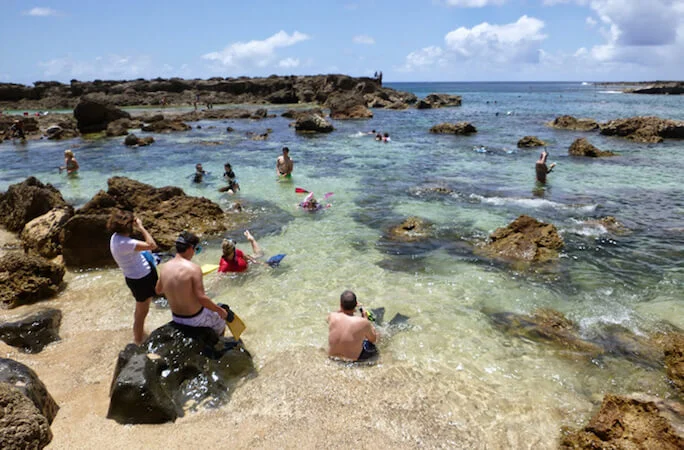
Shark’s Cove is a spot where you can swim with many fish in Hawaii’s beautiful sea.
It has more fish than Hanauma Bay on the East Coast or Electric Beach on the West Coast, making it truly the number one fish paradise in Hawaii.
It is a popular spot visited by many people from all over the world, not just Hawaii locals, to enjoy snorkeling!
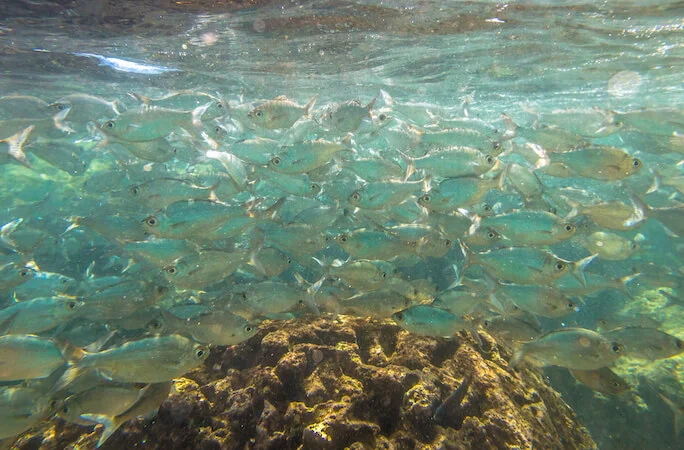
When you enter the ocean, even in the shallows of a few meters, it is already like a natural aquarium. You can encounter over 40 types of fish within snorkeling range, including colorful, large, medium, and small fish.
You cannot enter during the winter season when waves are strong as it is dangerous, but it is the number one recommended snorkeling spot during the summer season!
Seasons and Important Notes for Shark’s Cove
When people hear Shark’s Cove, they often ask, “Are there sharks?” but it is called so because the shape of the cove looks like a shark’s bite mark.
Please rest assured that sharks do not come within the swimming range!
Conversely, if you want to meet sharks, there are shark tours that go offshore by boat from Haleiwa on the North Shore. Haha.
Recommended Season
The best season for Shark’s Cove is from May to September, and it becomes almost inaccessible from November to March due to high waves which are dangerous.
April and October are transitional months where you can enter on some days but not on others.
The time when the waves are truly calm and you can almost certainly swim is from late May to early September.
Notes for Shark’s Cove
The water depth reaches about 5 meters soon after entering the sea, so those who cannot swim at all should play at the neighboring Pupukea Beach.
Pupukea Beach has a rock wall that prevents waves from coming in, and the depth is about knee to waist high, so even non-swimmers can enter.
Also, injuries from cutting feet on rocks occur frequently at Shark’s Cove.
This is because the terrain has sharp rocks, so even a slight bump can cut you.
Therefore, be sure to enter and exit from the sandy area when swimming!
Areas with Many Fish and Sea Turtles
There are always large schools of fish along the rocky area on the left edge inside the bay of Shark’s Cove.
Schools of fish are also often seen in the shallow parts near the shore in the center.
The offshore part in the center gets deep and has fewer fish, so you can ignore it.
If you swim along the rocky area on the right side of the bay, there is a high probability of encountering sea turtles.
Diving is also recommended, as the surrounding area features underwater caves, ensuring you will enjoy seeing many creatures.
Three Tables
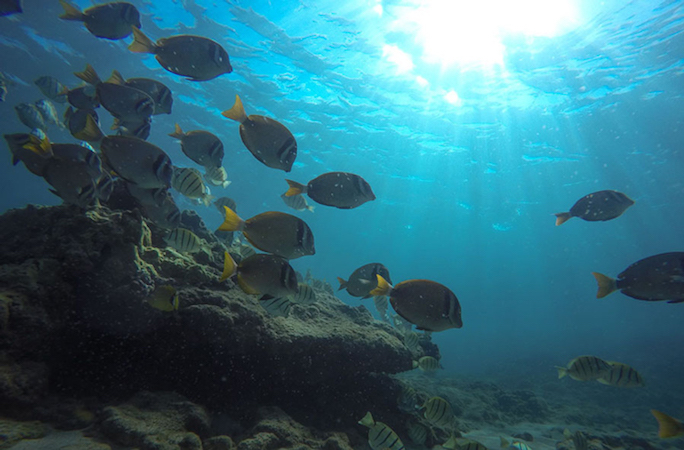
Three Tables is a hidden North Shore beach with outstanding clarity and plenty of fish.
As the name suggests, it is named after three table-like rocks located about 20 meters from the beach.
You can relax on the beach or swim with fish around the rocks; it is a recommended hidden gem known to those in the know!
The fish seen at Three Tables include wrasses, unicornfish, butterflyfish, and the state fish Humuhumunukunukuapuaa (Reef triggerfish).
Due to the terrain, the water clarity is outstanding and there are few people, making it perfect for snorkeling.
Three Tables Offers Outstanding Transparency
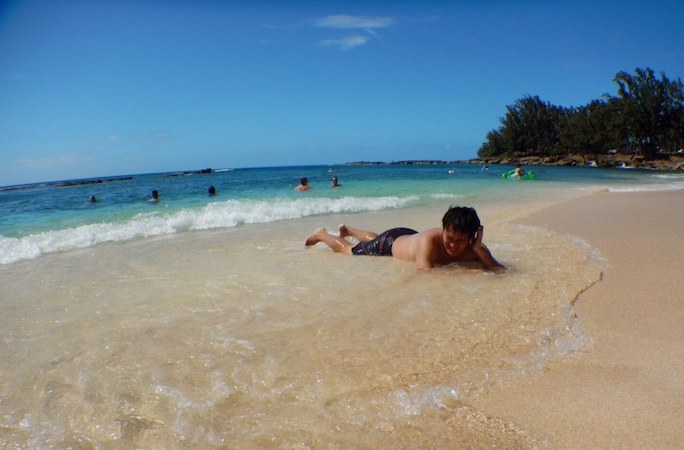
It is a recommended beach not only for snorkeling but also for spending a relaxing day by the sea.
Actually, on the North Shore, even neighboring beaches have different terrains, so the atmosphere changes completely.
The beach at Three Tables consists of fine, beautiful coral rather than sand. The shallows are a beautiful beach, while the offshore area features rocky terrain with high transparency.
You can play according to your purpose, such as the shallows if you want to relax with children, or offshore if you want to see lots of fish.
The depth up to the tables is not enough to drown but deep enough to not stand, and it gets suddenly deep from the outside of the tables.
It is dangerous to approach during high waves in winter (around October to March), so the recommendation is the summer season from mid-May to mid-September.
Hanauma Bay
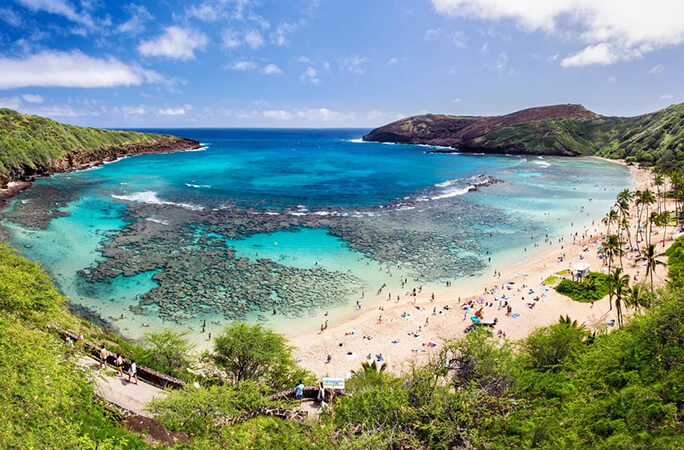
Hanauma Bay is a popular snorkeling beach where you can swim with many colorful fish and sea turtles.
You can see dozens of types of fish of all sizes, and it has been selected as the best beach in the US, so its fame and beauty are unquestionable. Access from the Honolulu area is also excellent!
You can easily go by bus, tour, or taxi from Waikiki, and facilities such as lockers and plate lunch shops are available, making it easy to visit.
There are several points to note, such as weekly holidays, operating hours, and the reservation period, so please plan your visit carefully rather than just going impulsively!
It is a very Hawaiian place that you can enjoy just by looking at the scenery without entering the sea.
How to Reserve Hanauma Bay
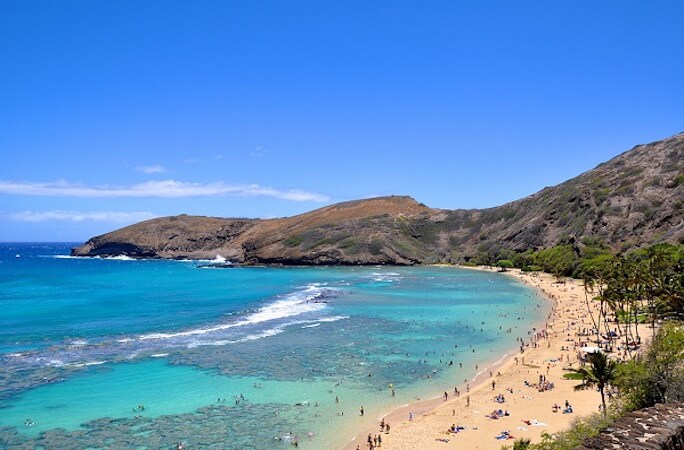
Advance online reservation is required for admission to Hanauma Bay.
Even without a reservation, you might be able to enter if there is space, but there is a possibility of a wasted trip, so be sure to check in advance.
Reservations are only accepted from 7:00 AM, two days prior to the visit date, so you cannot book months in advance.
For example, if you want to go on a Saturday, you can book from 7:00 AM on Thursday.
Reservations are possible in 10-minute intervals, and when the 15-35 person slots are filled, that time slot cannot be selected.
It often sells out in about 15 minutes after starting at 7:00, so be prepared to book at 7:00 AM two days before your planned visit.
By the way, admission hours are 6:45 AM to 1:30 PM, and it closes at 4:00 PM.
Hawaii residents do not need advance reservations, but entry is limited to 6:45 AM to 9:00 AM.
How to Access Hanauma Bay
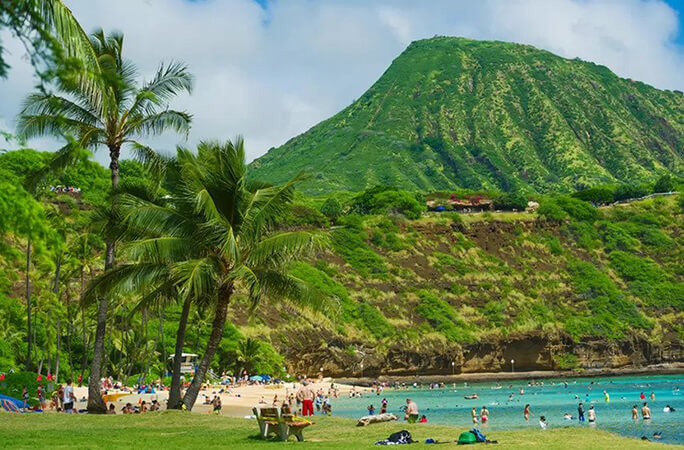
Hanauma Bay restricts the entry of commercial vehicles such as tours and taxis.
Therefore, if visiting by tour, taxi, or bus, you will generally have to walk from a distance of about 5 minutes, except for some companies.
If visiting by rental car, there are 300 parking spaces, but be careful as they fill up quite early on a first-come, first-served basis!
If full, you will have to use street parking in a residential area about a 10-minute walk away.
Process for Entering Hanauma Bay
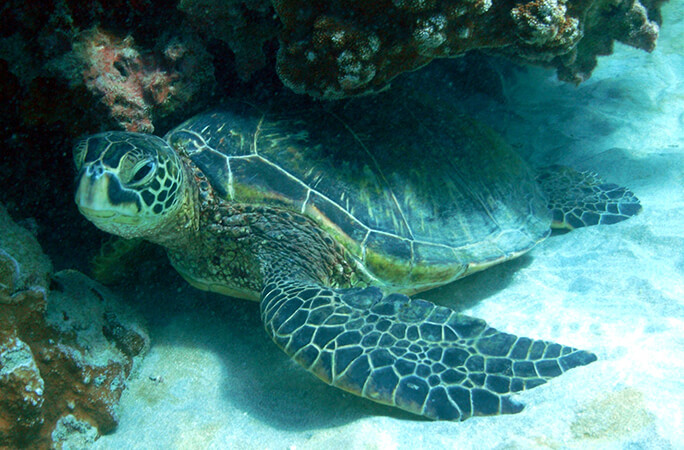
First, at the entrance, show your ticket information issued at the time of reservation and your ID (copies not accepted), and pay the admission fee.
By the way, admission is free for children 12 and under, Hawaii residents, and international students.
There are no places to buy food after entering, so stop by the shop opposite the ticket counter if necessary.
After entering, you will go to a room to watch a 9-minute lecture video for using Hanauma Bay.
Depending on the crowd, you usually wait about 30 minutes until showtime.
During that time, you can visit the Education Center showing history and coral specimens, or relax in the outside waiting area.
The lecture video covers rules to protect the ecosystem as a nature reserve, such as:
- No feeding the fish at the beach
- No taking sand or coral
- No use of water-soluble sunscreen / tanning oil
- No standing or walking on coral reefs
- No smoking or drinking alcohol
The video is screened in English, so a service lending Japanese headsets for free is available for those who need them.
To Hanauma Bay Beach
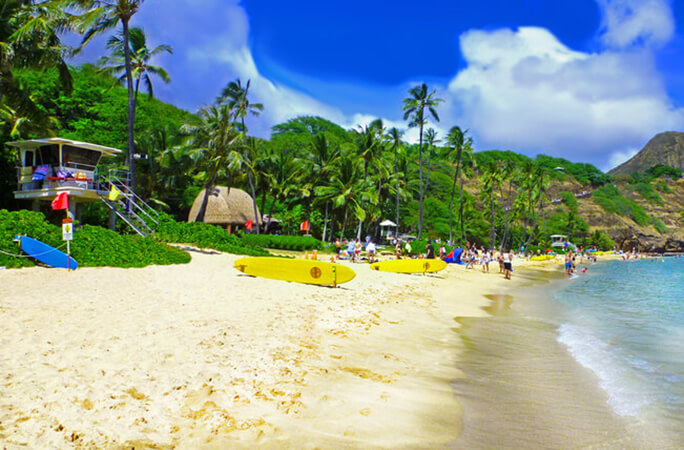
After watching the lecture video, you can finally head to the beach!
If you walk down the slope for about 5 to 6 minutes, you will arrive at the beach.
There is a paid trolley service for those who find walking difficult.
- 1-Day Pass: $2.50
- One-way Down: $1.25
- One-way Up: $1.25
The slope is quite steep, so please use it if you are not confident in your physical strength or have walking issues.
Generally, it takes about 3 minutes to go down and 5 minutes to go up.
Snorkeling at Hanauma Bay
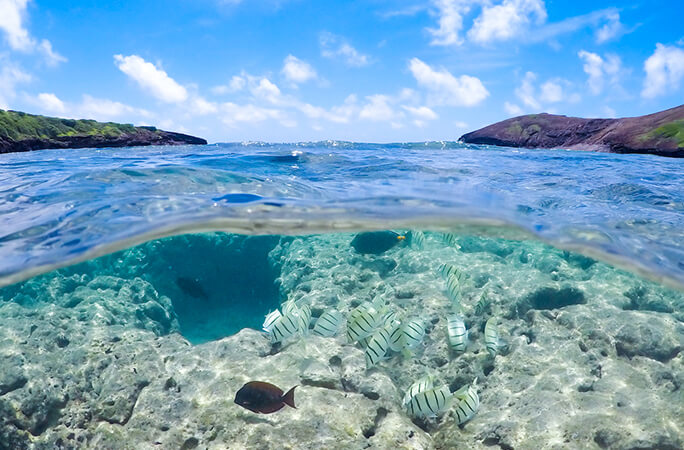
Hanauma Bay is famous in Hawaii as the “beach that takes the most time before you can swim.” Haha.
Once you reach the beach, enjoy snorkeling thoroughly, surrounded by high transparency where you can see the seabed, coral reefs, and colorful fish.
By the way, it is closed on Mondays and Tuesdays, so we recommend visiting on Wednesday morning when the transparency is highest!
Sea turtles are often seen in the area on the left side of Hanauma Bay.
Schools of fish are abundant around where it gets slightly deeper beyond the coral reef.
For families with small children, playing with smaller fish in the shallows is safe and injury-free.
Pupukea Beach
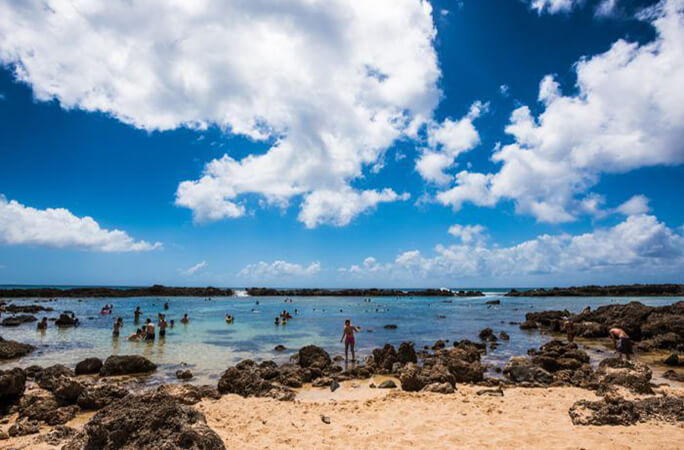
Pupukea Beach is a snorkeling spot where you can enjoy the blue sea and tropical fish.
“Pupukea” means “white shell” in Hawaiian, and it is designated as the second marine life conservation district on Oahu after Hanauma Bay.
Although there are many fish and the water clarity is wonderful, it is a hidden gem rarely listed in guidebooks, so there are fewer tourists.
Since it is a no-fishing area, the fish are not wary, and you can see various fish right in front of your eyes.
The fish seen here are mainly damselfish, wrasses, and the Hawaii state fish “Humuhumunukunukuapuaa.”
The beach is surrounded by rock walls forming a pool-like cove, so families with small children can enjoy snorkeling with peace of mind!
Notes for Pupukea Beach
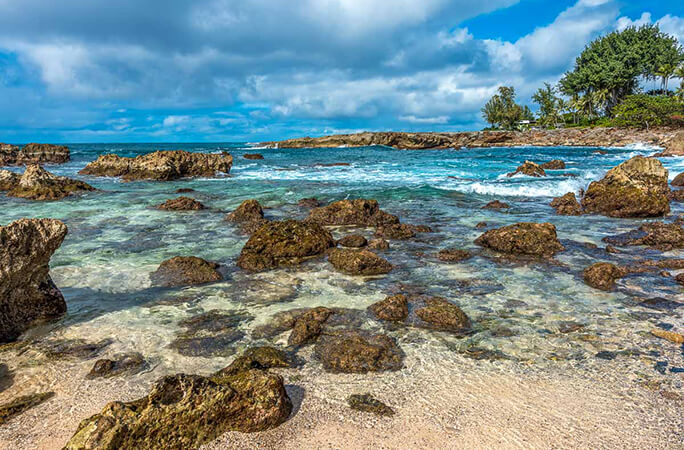
Pupukea Beach is basically very safe, but there are just two points to note.
First, watch your feet!
The depth is about knee to waist deep, so even non-swimmers are fine, but many people get scratches on their feet because the rocks are rugged and the water is shallow.
There are also sea urchins and coral, so be very careful about injuries.
The point is to swim as much as possible without walking when the water is deeper than your knees, and to play as far away from the rocky areas as possible.
Second, the current is faster than imagined when the waves are big!
The recommended season is summer from May to September, but since it is surrounded by rocks and less affected by waves, there are many days you can enter even in winter.
However, on days with considerably large waves during the winter season, waves sometimes crash over this rock wall.
At that time, even if it is shallow, the tidal current can sweep your feet, making it dangerous.
Be careful not to enter when no one is swimming around or when “No Swimming” tape is posted!