
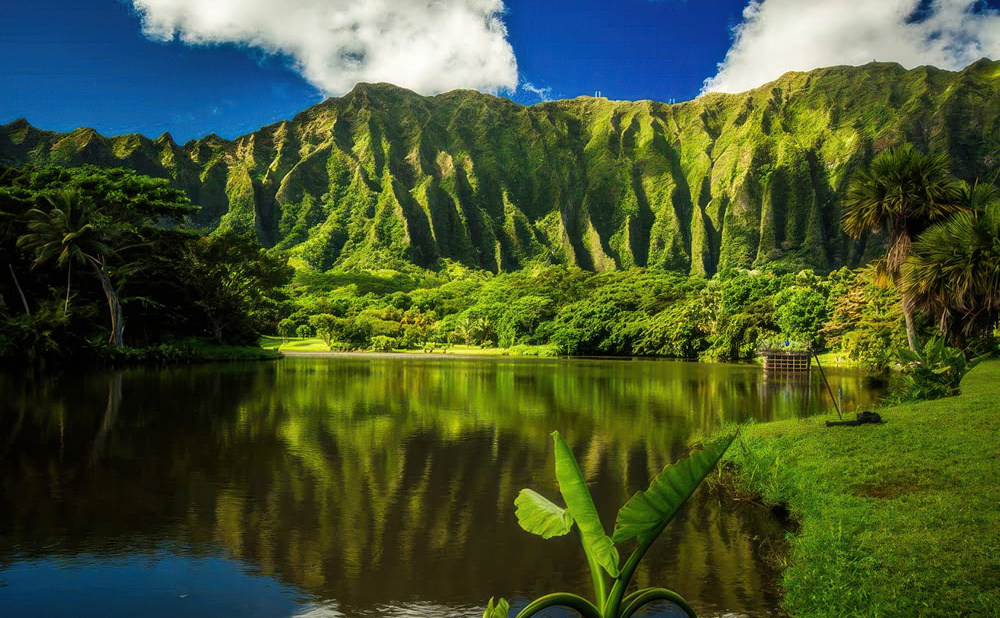
When speaking of places where you can feel vast nature on Oahu, the most urban island in Hawaii, botanical gardens are the answer!
Botanical gardens are the best places to observe rare wild birds and plants, making them more recommended than standard nature parks or countryside areas.
In this article, we have compiled the top 5 popular botanical gardens in Hawaii recommended by Aloalo Travel tour guides!
Each location retains plenty of authentic Hawaiian charm, so you should be able to enjoy an atmosphere that is very close to untouched nature.
We have summarized the most recommended botanical gardens, so please use this as a reference for your trip to Hawaii.
Koko Crater Botanical Garden
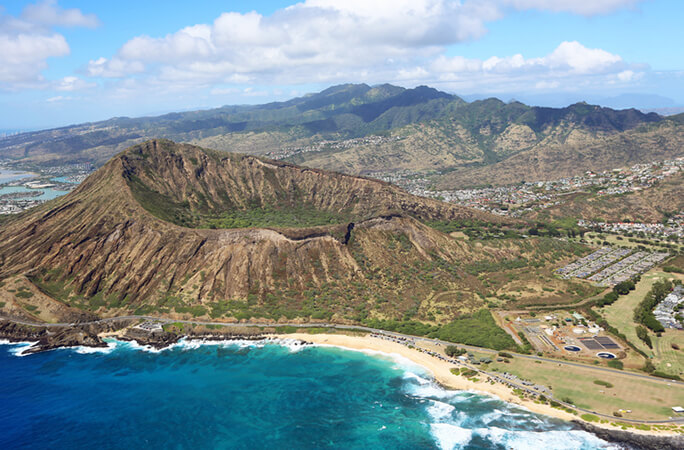
Koko Crater Botanical Garden is a hidden spiritual energy spot in Hawaii where you can enjoy various types of flowers from around the world!
While the Kilauea Volcano on the Big Island is famous for still actively erupting, both Diamond Head and Koko Crater on Oahu were also volcanically active over 100,000 years ago.
The vents became craters, and it is said that they took their current shape about 40,000 years ago.
Koko Crater Botanical Garden is a spot where you can feel the power of the earth on your skin. Despite boasting the second-largest scale among botanical gardens on Oahu, admission is surprisingly free.
It is a recommended spot where you can thoroughly enjoy Hawaiian flowers such as plumeria, bougainvillea, and hibiscus, as well as plants and cacti that can only be seen here!
Course at Koko Crater Botanical Garden
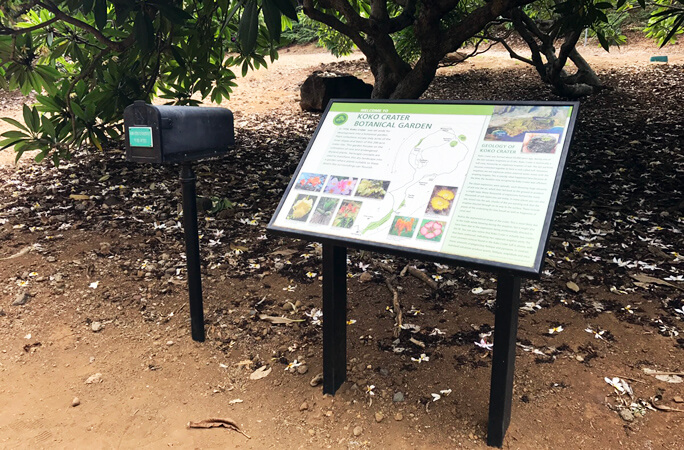
Koko Crater Botanical Garden is built inside the crater and is maintained entirely as a walking course.
There are park maps at the entrance (inside a mailbox), so grab one if you need it!
There is also information written about the history of how the crater was formed and the plants you can see in the garden.
Walking the entire route of the garden is about 2 miles (3.2 km), taking about 1 hour. You can see various trees from around the world, including Africa and Asia, as well as native Hawaiian species.
If you just do a quick loop around the entrance area, you can tour it in about 15 to 20 minutes.
Even then, you can fully enjoy plumeria, bougainvillea, and hibiscus!
Plumeria at Koko Crater Botanical Garden
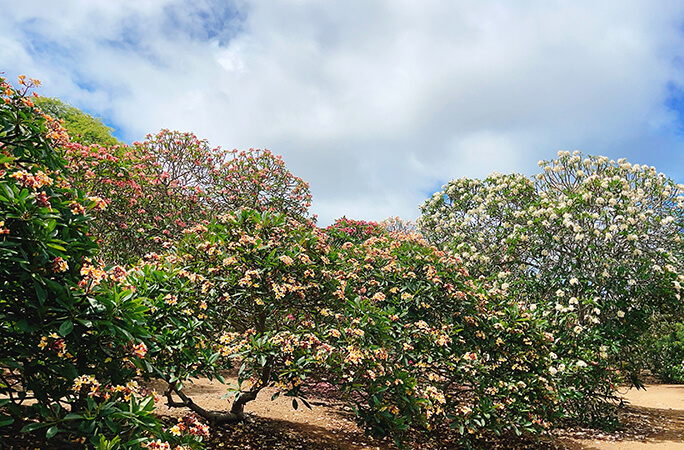
The most popular area at Koko Crater is the plumeria section, where you can view over 100 plumeria trees.
It is like a forest of plumeria, making it a true healing spot where you are soothed by the scenery and scent!
The plumeria flower season is specifically from May to October, so if you visit Hawaii during this time, please be sure to stop by.
During the peak bloom, you can enjoy the sweet floral scent filling the garden, and when the flowers begin to fall, the ground looks as if it is covered in a carpet of petals.
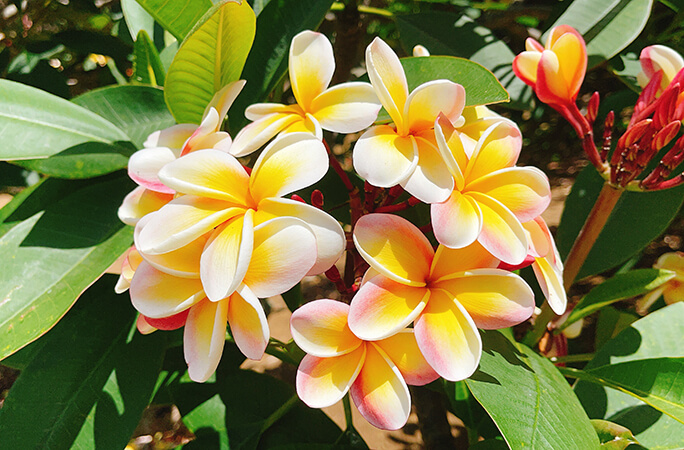
This is the classic yellow color often seen in shops!
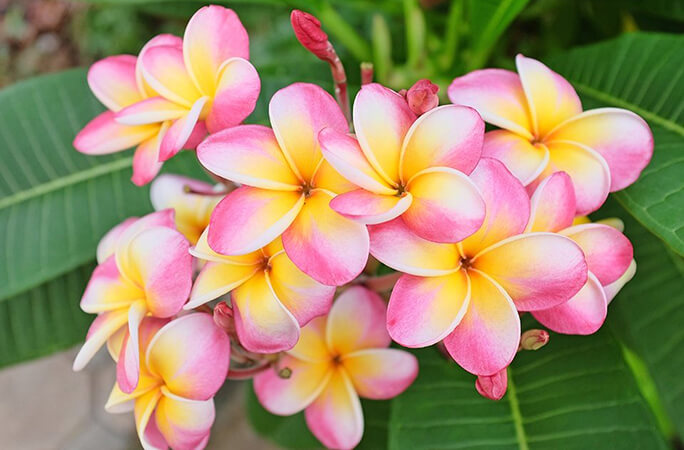
The most colorful plumeria, featuring a fusion of pink, white, and yellow!
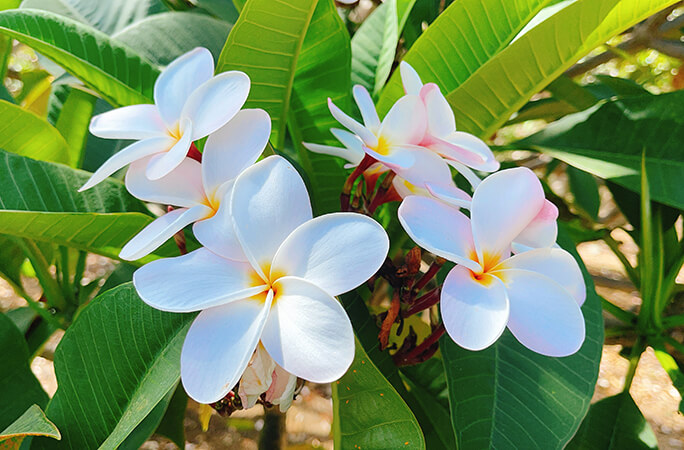
Pure white plumeria that is as beautiful as an ornament!

Plumeria with a powerful red color!
They bloom plentifully around eye level, so it is excellent for taking photos.
By the way, women often wear this plumeria behind their ears; if worn on the right ear, it means they are single, and if on the left ear, it means they are married or have a partner.
Cacti at Koko Crater Botanical Garden
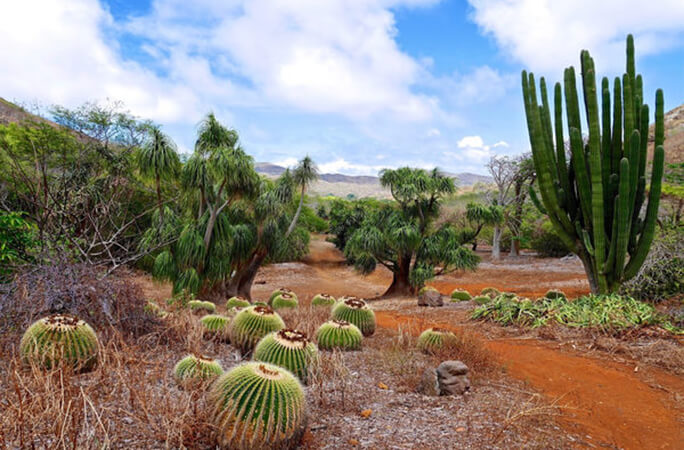
Alongside the plumeria, another popular area at Koko Crater is the cactus section, reminiscent of Arizona!
This area features plants native to Hawaii, cacti from the US mainland, and plants that live in the African savanna.
You might not associate cacti with Hawaii, but you can actually see various cacti ranging from small round ones to tall, gigantic ones.
It is an area slightly removed from the entrance, but you can reach it with a 15-minute walk, so walking up to this point and then turning back is a good option.
It is scenery unlike typical Hawaii, but its impact is overwhelming.
Other Areas of Koko Crater Botanical Garden
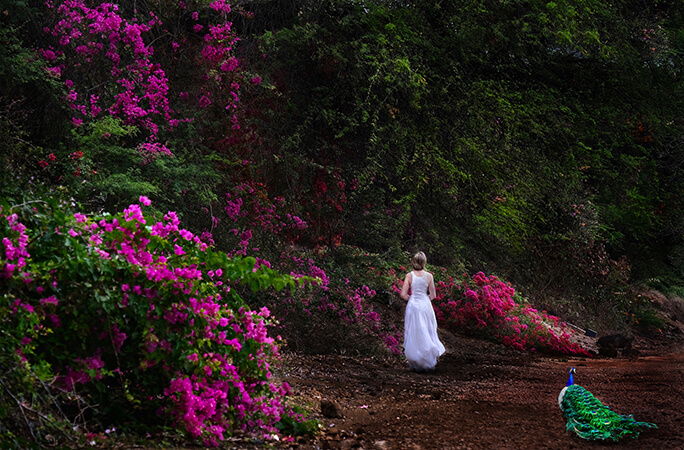
Generally, the highlights for sightseeing visitors are the plumeria and cactus areas, but there are many other attractive areas as well.
Hawaii has many endemic species that have evolved uniquely, so for plant lovers, it will be a continuous series of irresistible sights.
We especially recommend plants that can only be seen here, such as Baobab trees, the Hawaiian native Wiliwili, and various types of palm trees!
Please try feeling the great nature of Hawaii while taking a walk or touring the energy spots.
Foster Botanical Garden

Foster Botanical Garden is Honolulu’s largest botanical garden, where over 10,000 types of tropical plants bloom in profusion.
It is an urban oasis where you can enjoy impressive nature right in the downtown area.
You can get a map and brochure at the entrance when you enter, so taking that with you will help you understand the details and make it more fun!
There are many plants including Hawaiian endemic species, as well as those designated as endangered species and rare plants that no longer exist in the wild.
Although the grounds are not vast, the garden is beautifully maintained, creating a great atmosphere and a place where your heart can be fully healed!
Popular Plants at Foster Botanical Garden
A feature of Foster Botanical Garden is that the variety of plants is overwhelmingly large compared to other botanical gardens in Hawaii.
We would like to introduce some recommended plants, focusing on popular areas within the garden and plants listed in the brochure!
The High-Impact Cannonball Tree
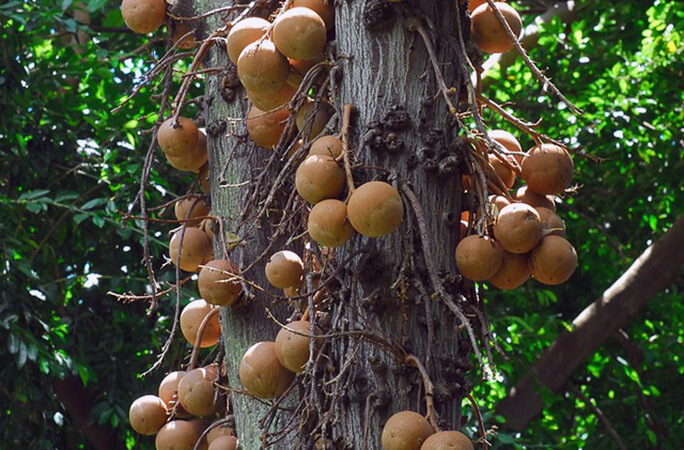
First is the Cannonball Tree, which leaves an impression you won’t forget once you see it.
As the name suggests, it has many heavy fruits about the size of cannonballs attached to it.
It is strange that there are trees with so many large fruits like this!
By the way, if you crack the nut open, there is another harder shell inside.
Inside that is a green fruit like an avocado, and the smell is extremely foul. Haha.
Actually, it is a fruit that can be eaten!
The World’s Tallest Caribbean Royal Palm
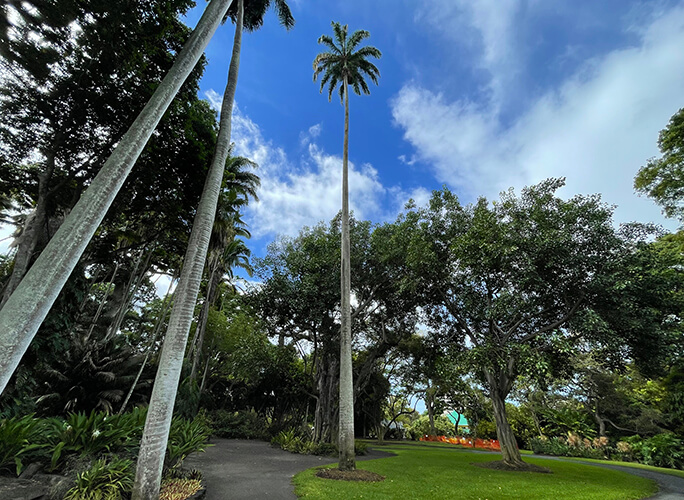
This Caribbean Royal Palm is a type of palm tree said to be the tallest in the world.
Its total height is 50 to 60 meters, and it is still continuing to grow.
It stretches so high that your neck might hurt looking up to the top, and it is so thin and tall that you might worry it will break in the wind.
Many people image palm trees when they think of Hawaii, so please enjoy the world’s largest palm tree.
Incidentally, there are many types of palm trees in Hawaii, and each has a completely different appearance.
At Foster Botanical Garden, you can see the endangered Double Coconut which produces the world’s largest seed (large ones are about 22kg), the Loulu (Fan Palm) which is native to Hawaii and designated as endangered, and the Talipot Palm which is native to Africa and is the largest tree in America!
Other Plants to Check Out
Seeing all the plants in the garden is very difficult, so here are a few impressive plants you should definitely check out.
- The Bodhi Tree, worshipped as the tree under which Buddha attained enlightenment
- The giant Queensland Kauri, used for shipbuilding and reaching over 45m
- The Sausage Tree, which bears long thin fruits weighing about 9kg
- Popular food ingredients like Macadamia Nuts, Sweet Potato, Breadfruit, Black Pepper, and Jackfruit
- The colorful and smooth Rainbow Eucalyptus (Rainbow Tree)
- Large Baobab trees, some of which are over 2000 years old
These are all plants that can only be seen here or are characteristic of Hawaii, so please check them out.
History of Foster Botanical Garden
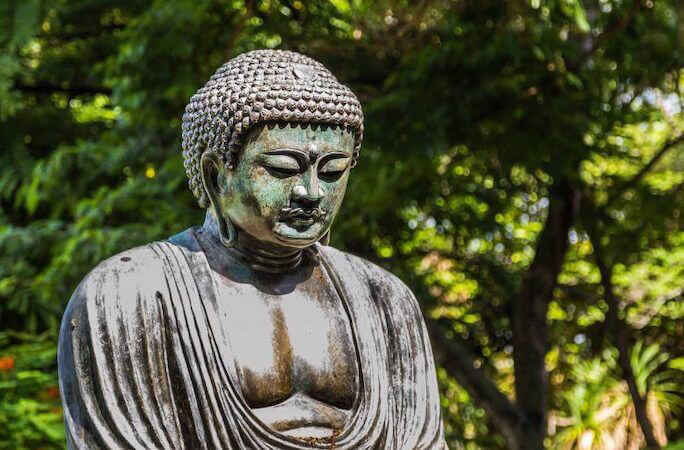
Foster Botanical Garden has an old history; it is said to have begun in 1853 when a German doctor purchased the estate of Queen Kalama, wife of King Kamehameha III, and began planting trees.
Was this doctor named Foster? Actually, no. Haha.
About 30 years later in 1884, the American couple Mr. and Mrs. Foster purchased it, and after the wife’s death, it was bequeathed to the City of Honolulu; it was named Foster Botanical Garden to pay respect to them.
Considering it was once a garden for a single house, it is incredibly huge!
After that, trees collected from all over the world were planted, and it was expanded to become what it is today.
By the way, the Great Buddha statue here is a replica of the Great Buddha of Kamakura, donated by Kanagawa Prefecture in 1968 to commemorate the 100th anniversary of Japanese immigration to Hawaii!
Hoomaluhia Botanical Garden
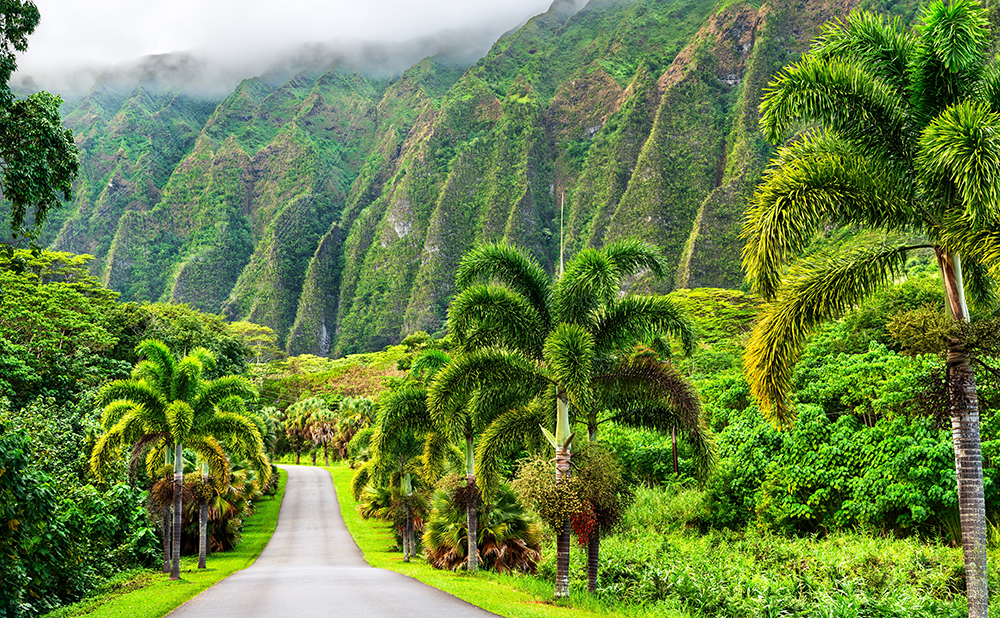
Hoomaluhia Botanical Garden is Hawaii’s largest scenic botanical garden.
Located at the northern foot of the Koolau Mountains, it covers a vast area of 1.6 square kilometers!
You can view plants native to Hawaii, as well as many plants from the Philippines, Africa, Sri Lanka, India, Polynesia, Melanesia, Malaysia, and various regions of tropical America.
Incidentally, Hoomaluhia means “to make a place of peace and protection” in Hawaiian, and true to its name, it is a spot where you are sure to feel a peaceful atmosphere protected by majestic nature.
Since it is a facility managed by the City of Honolulu, most activities are free.
It is a hidden gem where you can enjoy the magnificent view, go fishing, camp, and enjoy various other things!
Fishing Pond at Hoomaluhia Botanical Garden
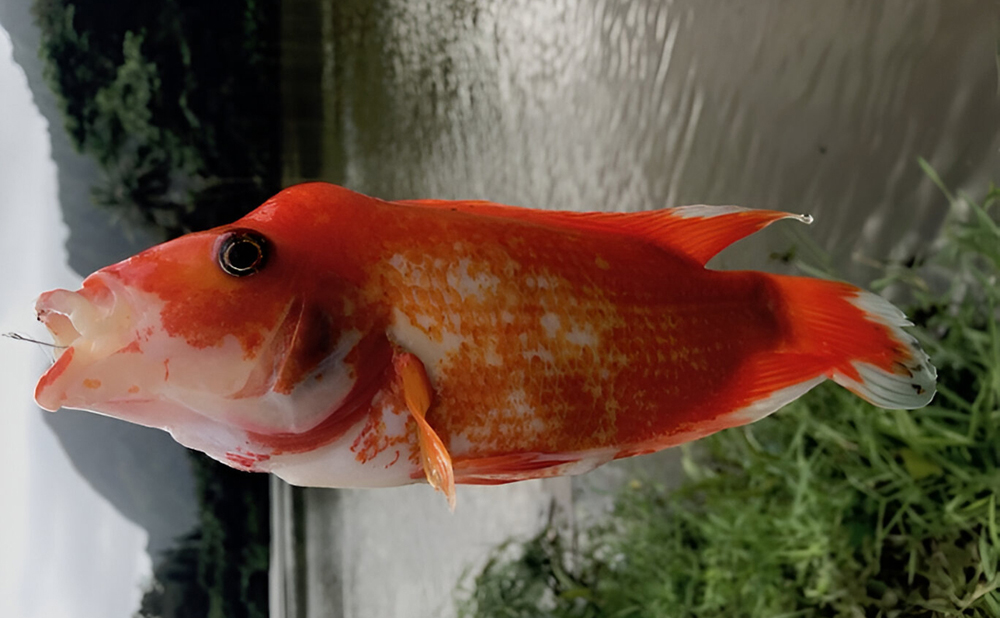
Hoomaluhia Botanical Garden has Hawaii’s only free fishing pond!
It is limited to Saturdays and Sundays from 10:00-14:00, but you can borrow bamboo poles for free, and the fish bite immediately. Haha.
Fishing poles are generally available even for walk-ins on the day, but on Saturdays during high season, free poles might run out, so going early is recommended.
By the way, the fish characterized by this red color (Red Devil) are caught most frequently.
There are also various other types of fish such as Koi and Peacock Bass.
Once you get the knack of it, you can easily catch about 20 fish in an hour.
The only trick is to roll up regular white bread to attach as bait and set the float a little long.
It is catch-and-release, so please release them gently after enjoying the fishing.
Feeding Experience at Hoomaluhia Botanical Garden
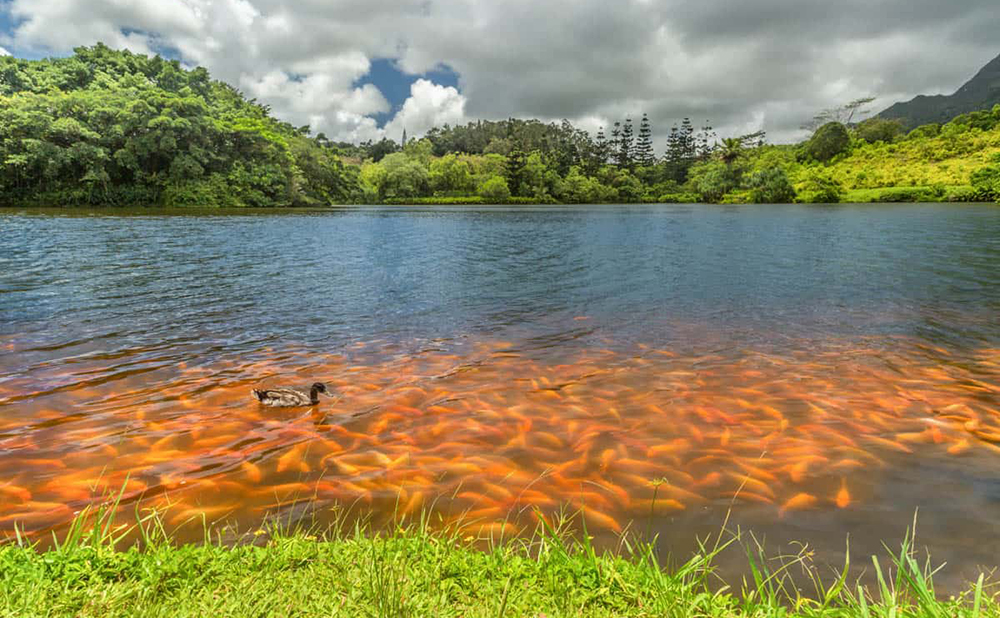
The opposite side of the fishing pond is a no-fishing zone, but here you can encounter various creatures like large numbers of fish, birds, and mongooses.
Even those who aren’t into fishing can interact with Hawaii’s creatures.
It is a hidden spot recommended for families, and children are sure to be delighted!
Since the weather changes easily and it is a rainy area, we recommend bringing rain gear like raincoats and taking measures against insects.
Walking or trekking while looking at the magnificent view feels incredibly good!
Nature Picnic at Hoomaluhia Botanical Garden
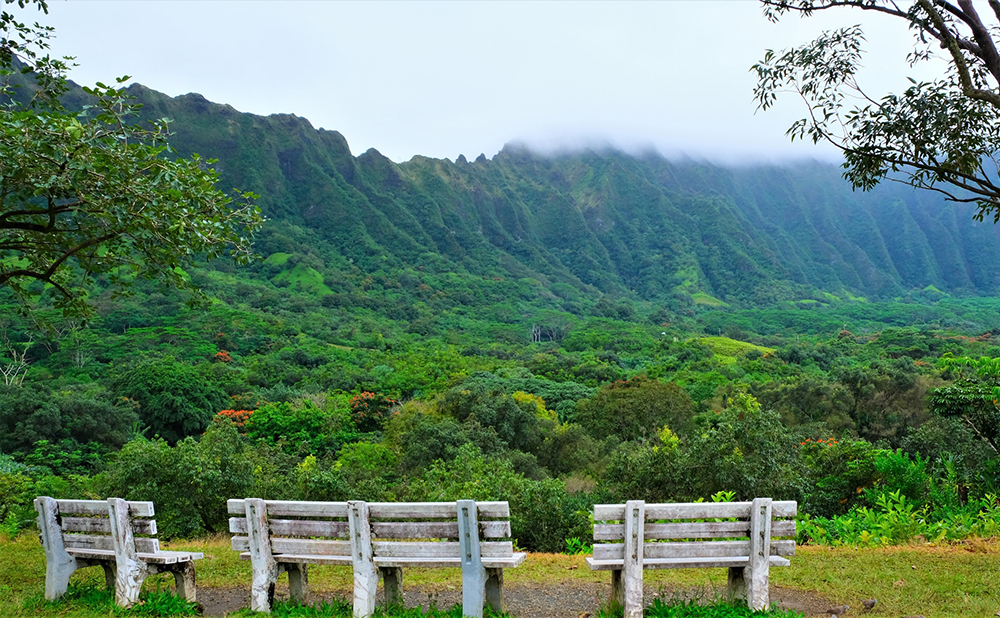
Hoomaluhia Botanical Garden is a scenic spot as far as the eye can see.
You can also enjoy a picnic or camping while feeling such supreme nature!
Camping is possible even if you are not a Hawaii resident, but a permit is required in advance, so if you are interested, please apply through the City and County of Honolulu website.
By the way, if you leave food out, wild animals like pigs, birds, and mongooses might take it, so be sure to store it securely.
Picnics are of course okay anytime, so bringing a plate lunch from nearby is also a nice idea.
Waimea Valley
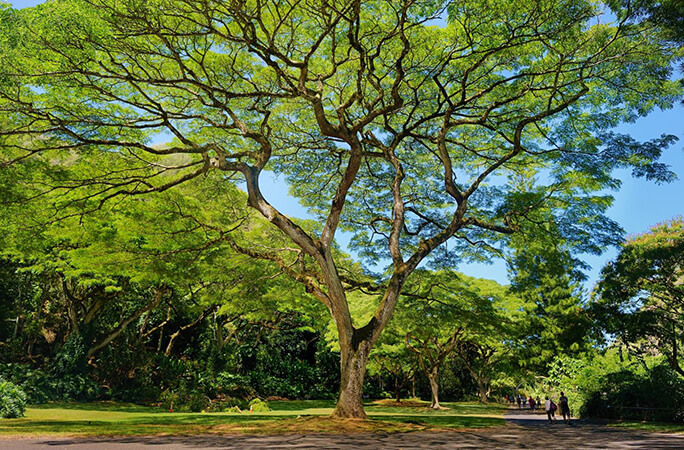
Waimea Valley is a botanical garden where you can touch upon the history of Hawaii and the culture of indigenous people.
Located on the North Shore where you can enjoy great nature, the trekking course allowing for casual observation of wild birds and nature is popular!
It has been a filming location for numerous movies and dramas including LOST, and overwhelming nature extends endlessly.
It is also a nature park with many endemic Hawaiian trees and birds, making it famous as a spiritual power spot.
Incidentally, “Waimea Bay Beach Park” is right nearby—where you can enjoy crystal clear waters in the summer season and huge waves in the winter season—so check that out as well!
Waimea Valley is a Treasure Trove of Wild Birds
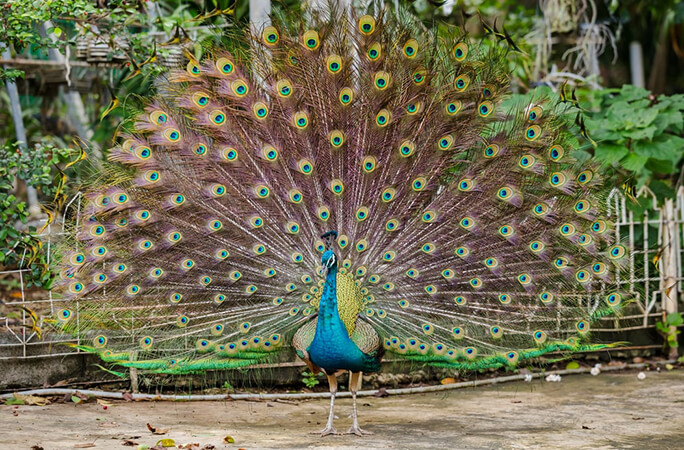
In addition to the magnificence of nature, Waimea Valley is characterized by being home to many wild birds!
You can see almost all birds found in Hawaii here, so please try counting how many types of birds you can spot when you visit.
The most popular bird is, of course, the peacock spreading its gorgeous feathers.
You can see them with a very high probability at the parking lot near the entrance or the stairway area next to the restrooms.
However, there are actually over 20 types of birds confirmed in Waimea Valley, including the Hawaiian Moorhen (Alae Ula) which is registered as an endangered species.
Commonly seen birds include Junglefowl, Cattle Egrets, Zebra Doves, Red-Crested Cardinals (birds with only red heads), and Northern Cardinals (red body with black around the beak)!
Waimea Valley is a World-Class Botanical Garden
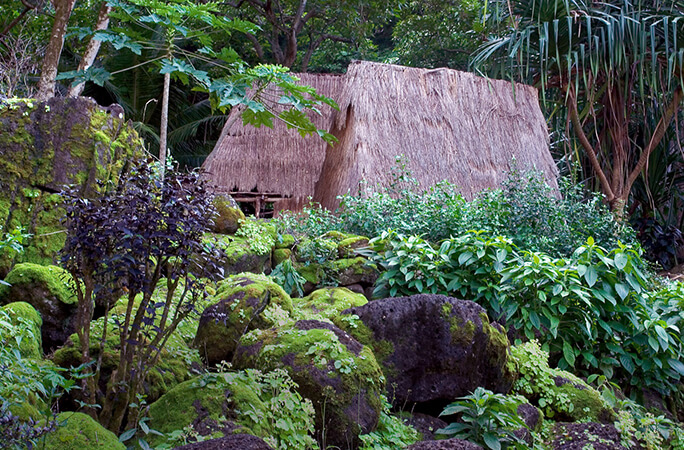
The garden is a healing valley where about 5,000 types of trees and flowers warmly welcome visitors along with the Hawaiian breeze.
Also known as the “Valley of the Priests,” Heiau (places of worship, religious facilities) where gods were enshrined are dotted here and there.
Although in English, names and descriptions are written on each tree; “Green labels” indicate generally occurring trees, while “Red labels” indicate very rare or endangered trees!
Also, since Waimea Valley was originally a place where Hawaiians lived, buildings from that time are reproduced in nature, making you feel as if you have traveled back in time.
Currently, a non-profit organization conducts operations and preservation activities, displaying the lifestyle of indigenous people in its original form and making it a precious place that conveys Hawaiian history and culture.
It is a perfect location for sightseeing, not only for learning about Hawaii’s history and culture but also as one of the world’s leading botanical gardens!
The Highlight of Waimea Valley is the Waterfall
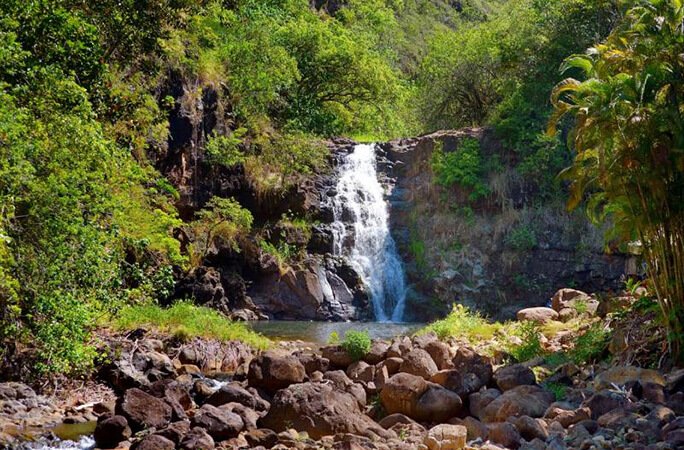
If you walk along the path in the garden for about 30 minutes (about 1.2km), you will find Waimea Falls at the end.
It is a very pleasant place filled with negative ions.
Since it is a waterfall basin used for filming various movies and dramas starting with the popular American TV drama “LOST”, you might be able to taste that atmosphere too?
By the way, swimming in this waterfall basin is also popular, and if there is water, many people enjoy swimming leisurely.
In the North Shore winter season, there are days when you cannot swim in the ocean due to large waves, so on such days, swimming in the waterfall basin of Waimea Valley might be good.
Waimea Valley Scenery & Sightseeing
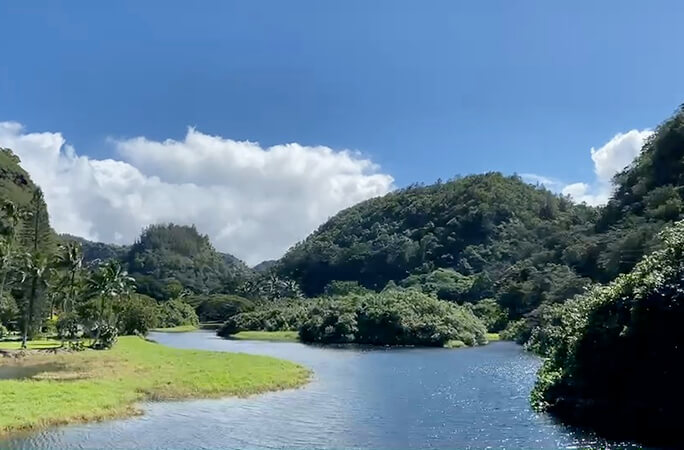
Waimea Valley is a course where you stroll along the river to the waterfall basin, taking about 30 minutes one way.
Mobile phone signals do not reach the surrounding area, so it falls into the category of deeply rural even within Hawaii. Haha.
During the walk, you can enjoy superb views the whole time.
On the other hand, the road is well paved and easy to walk on, with almost no incline, so it is excellent as a tourist spot!
Facilities such as a food court, souvenir shops, and shuttle buses for moving within the park are also well-equipped.
The time required is about 1 hour round trip, but we recommend taking about 2 hours to stroll leisurely.
The Popular North Shore Farmers Market
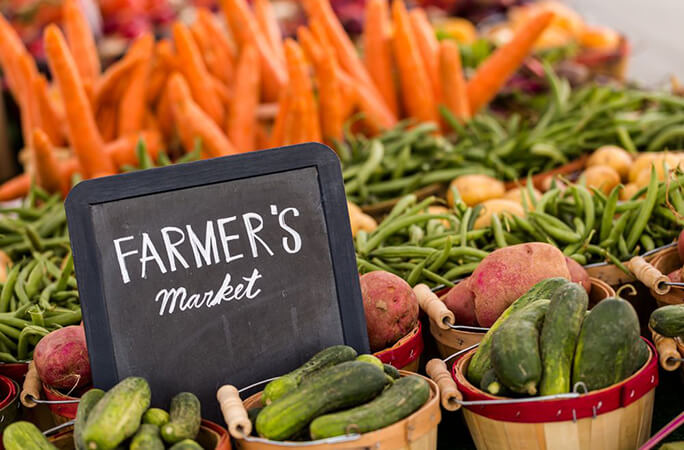
A farmers market lined with local shops is held every Thursday from 2:00 PM.
The North Shore is a rural area with many farms, so the farmers market has a nice local feel. Haha.
In addition to organic vegetables, fruits, honey, and handmade items, there are many delicious food stalls, so you are sure to enjoy it!
If you are going to visit, why not time it for Thursday?
It is a spot with many charms such as overwhelming nature, tours of movie and drama filming locations, many wild birds, and Hawaiian culture and history, so please explore while being healed.
Wahiawa Botanical Garden
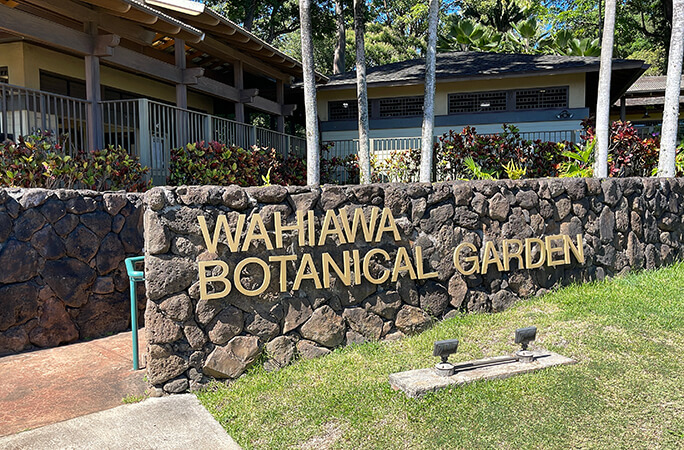
Wahiawa Botanical Garden is a treasure trove of plants where you can enjoy a hidden gem atmosphere while being one of Hawaii’s 5 major botanical gardens.
The garden is located in a ravine, and the atmosphere changes depending on the elevation where you walk.
You can enjoy mainly Hawaiian native forests in the upper area where the path is paved, and tropical rainforest jungles in the lower area down in the ravine!
Being a plateau area sandwiched between the Waianae Mountains and the Koolau Mountains, rainfall is heavy throughout the year, and many tropical plants inhabit the area.
It is the perfect location for a leisurely walk while listening to the chirping of birds.
Recommended Plants at Wahiawa Botanical Garden
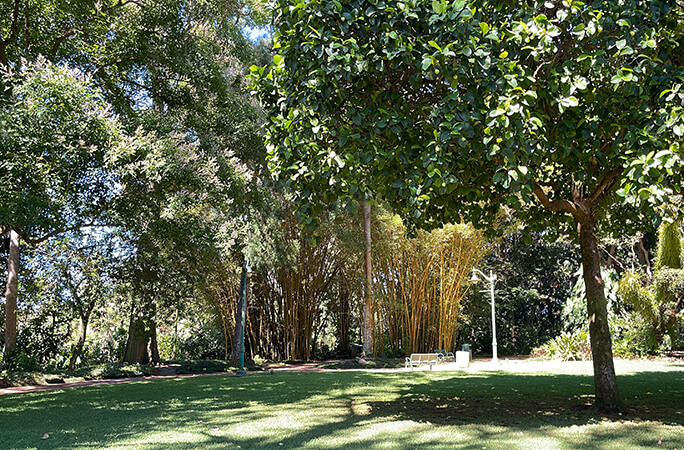
If we were to name a feature unique to Wahiawa Botanical Garden among the many botanical gardens in Hawaii, it would definitely be the abundance of tropical plants!
In particular, plants specific to tropical rainforests such as ferns and mosses are rarely seen in other places in Hawaii.
You can observe interesting plants such as Heliconia often used as designs for Hawaiian quilts, the Loulu palm native to Hawaii, and Hapu’u which is only seen in moist places at high altitudes.
Since it is a place with frequent rain meaning there are many mosquitoes, and the paths have a maze-like structure, be sure to prepare bug spray and comfortable walking shoes!
Palm Trees on Royal Palm Drive
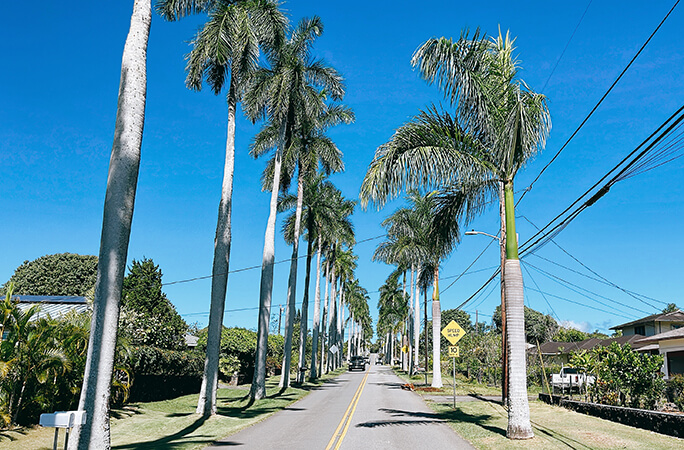
If you exit the botanical garden and move about one block, there is a street lined with palm trees on both sides.
This is a street known to those in the know, with the lovely name “Royal Palm Drive.”
The reason such a road exists is that a plantation manager (a figure similar to a high-ranking government official today) used to live here, and palms were planted on the road leading to his mansion.
Palm trees go hand in hand with mansions, both now and in the past. Haha.
It is very close to the botanical garden, so please check this out as well.